

What Is A Serum?
A serum is a lightweight, fast-absorbing skincare product made to deliver a high concentration of active ingredients deep into the skin. Because its molecules are smaller and more targeted than those in a cream, a serum penetrates beyond the surface and works on a specific concern such as hydration, fine lines, dullness or barrier strength. You apply it after cleansing and before your moisturiser, so it does the corrective work while your cream seals everything in.

What does a face serum actually do?
The job of a serum is delivery. Cleansers clean, moisturisers protect and hydrate the surface, but a serum carries treatment-level concentrations of actives into the deeper layers where they can make a measurable difference. That is why serums tend to show results faster than other steps in a routine.
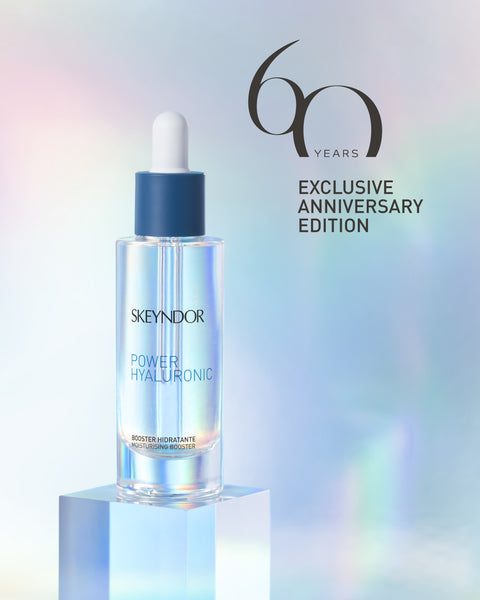
Take Skeyndor's Hyaluronic Moisturising Booster Serum from the Power Hyaluronic range as an example of how this works in practice. It is built around two real, complementary actives:

- Hyaluronic Acid (very low molecular weight) — protects the skin against environmental aggressors so they do not penetrate below the corneal layer.
- Hyaluronic Acid (high molecular weight) — penetrates the deeper layers of the dermis and stimulates the skin's own synthesis of new hyaluronic acid, keeping skin hydrated.
- Xylitol — a naturally derived molecule, fully compatible with skin, proven to increase aquaporin levels so moisture flows where it is needed and sits as a protective barrier against the factors that usually dry or dehydrate skin.
This formula contains 1% hyaluronic acid with a delivery system designed to reach the lower layers of the skin, and is clinically proven to maintain hydration for 24 hours. That is the difference a well-built serum makes: not a surface coating, but targeted delivery.
How to use a serum
A serum sits early in your routine. The order is simple:
- Cleanse so the skin is clean and able to absorb.
- Apply your serum to clean, dry skin — a few drops are enough. Massage it in gently across the face and throat, keeping clear of the immediate eye area.
- Moisturise to lock the actives in and reinforce the skin barrier.
- In the morning, finish with sun protection.
Always read the label first. Some serums are formulated for daytime use, others for night, and some can be used both morning and night. When you are unsure which suits your skin, a professional skin therapist can guide you.
Is a serum a replacement for moisturiser?
No. A serum and a moisturiser do different jobs. A serum carries concentrated actives into the skin and absorbs quickly without leaving a greasy film. A moisturiser forms a barrier on the surface that holds water in and keeps those actives where they belong. Used together, they reinforce each other — the serum treats, the cream protects. A serum is there to improve the results of your routine, not to replace your moisturiser.
Types of serum, explained
The word "serum" is often paired with other terms, which is where it gets confusing. Here are the most common types, with real Skeyndor examples.
Booster serum
A booster serum gives a quick, focused boost toward one goal — usually hydration. The Hyaluronic Moisturising Booster Serum above is the classic example: a 24-hour hydration and plumping boost. For skin under environmental stress, the Oxygen Boosting Serum — Anti Pollution Barrier is built to shield skin from pollution and oxidative stress, with a fermented filtrate of Alteromonas and Biosaccharide Gum-4 that creates a barrier filter against contamination, a liposomal Lepidium Sativum extract that helps eliminate toxins, and Malachite extract that helps neutralise free radicals.
Serum concentrate
A concentrate holds especially high levels of an active. Skeyndor's Resurfacing Peel Concentrate 15% from the Power range is a strong resurfacing serum built on biological peptides and a blend of acids (gluconolactone, lactic, mandelic and phytic). Note that not every concentrate is a serum — Skeyndor's Vitamin C Ampoules are concentrates too, but they arrive in single-use breakable ampoules rather than a dropper bottle.
Serum-in-cream

If you want serum-level results in the richer texture of a cream, a serum-in-cream blends the two. Skeyndor's Intensive Repairing Retinol Serum-In-Cream from the Power Retinol range is built around stabilised Pure Retinol, which works to repair skin architecture and restore tone and texture; Bakuchiol, a natural retinol-alternative that stabilises the formula and soothes; and Soy Extract, which calms and supports the barrier to reduce the sensitivity often linked with retinol. It smooths texture and helps soften the look of lines without the irritation retinol can sometimes cause.
Choosing the right serum for your skin
The right serum depends on your skin type and your main concern. Dehydrated skin benefits from a hyaluronic booster; skin exposed to city pollution suits an antioxidant, barrier-building serum; ageing or uneven texture responds to retinol or a resurfacing concentrate. Read the ingredient list, match it to your goal, and pair the serum with a good moisturiser afterwards for the best result. For blemish-prone skin, look for lightweight, non-greasy textures.
Frequently asked questions
What is a serum?
A serum is a lightweight skincare product that delivers a high concentration of active ingredients deep into the skin. It is applied after cleansing and before moisturiser, and is designed to target a specific concern such as hydration, fine lines or dullness.
Do I still need a moisturiser if I use a serum?
Yes. A serum delivers actives but absorbs quickly and does not form a protective surface layer. A moisturiser seals those actives in and reinforces the skin barrier. The two work best together.
When should I apply my serum, morning or night?
It depends on the serum — always check the label. Some are formulated for day, some for night, and some for both. Hydrating serums like a hyaluronic booster generally suit both morning and night; in the morning, follow with sun protection.
How long until a serum shows results?
Because serums deliver concentrated actives directly into the skin, they tend to work faster than other steps. A hydration booster can show plumper, dewier skin almost immediately, while resurfacing or retinol serums build their results gradually over several weeks of consistent use.
The Skeyndor difference
Skeyndor is a professional Spanish skincare house with over 50 years of laboratory research behind its formulas. Every serum referenced here is sold through trained skin professionals, so the advice you receive is matched to your skin rather than guessed at. If you would like a personalised recommendation, find your nearest Skeyndor salon and speak with a qualified skin therapist who can tailor a routine to your skin's needs.
Before You Go…
Here are a few handpicked articles to inspire your next self-care moment.


